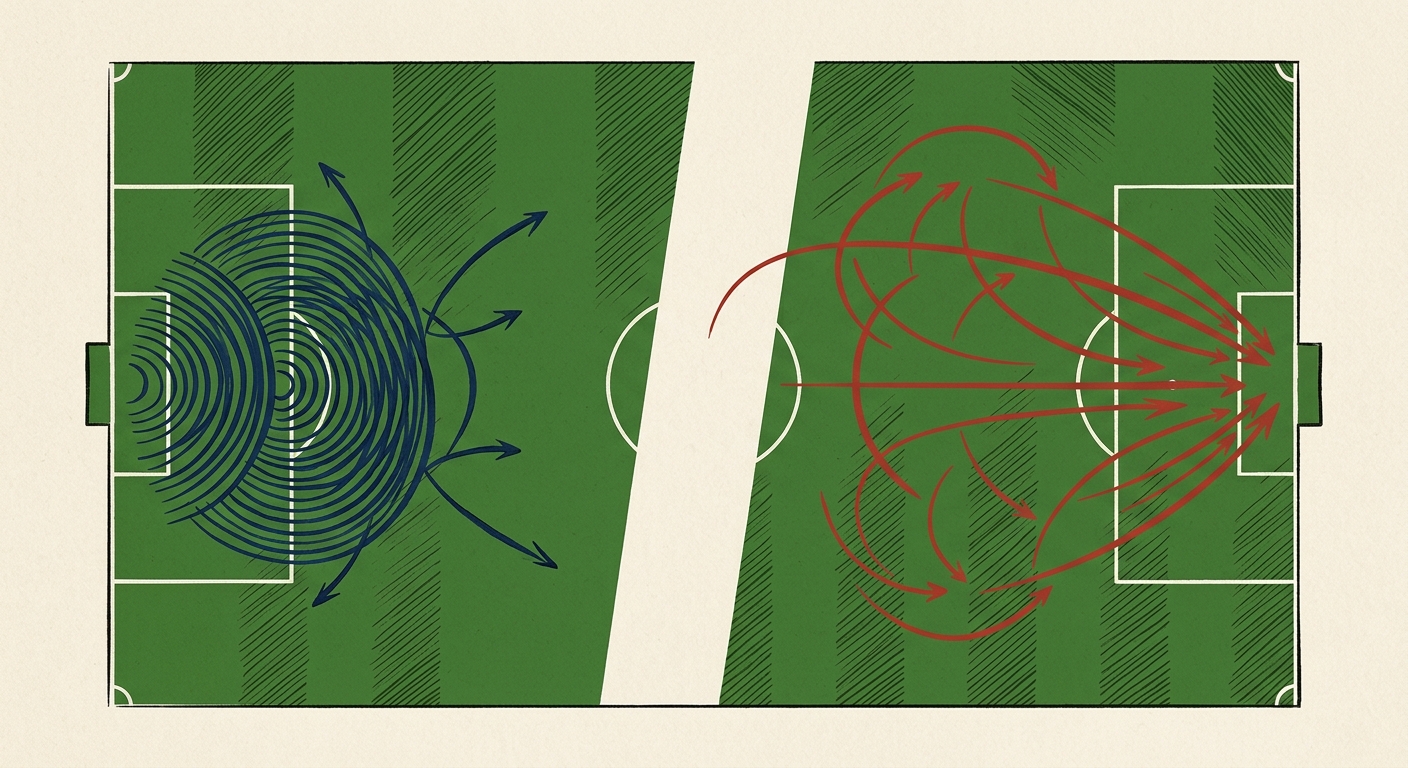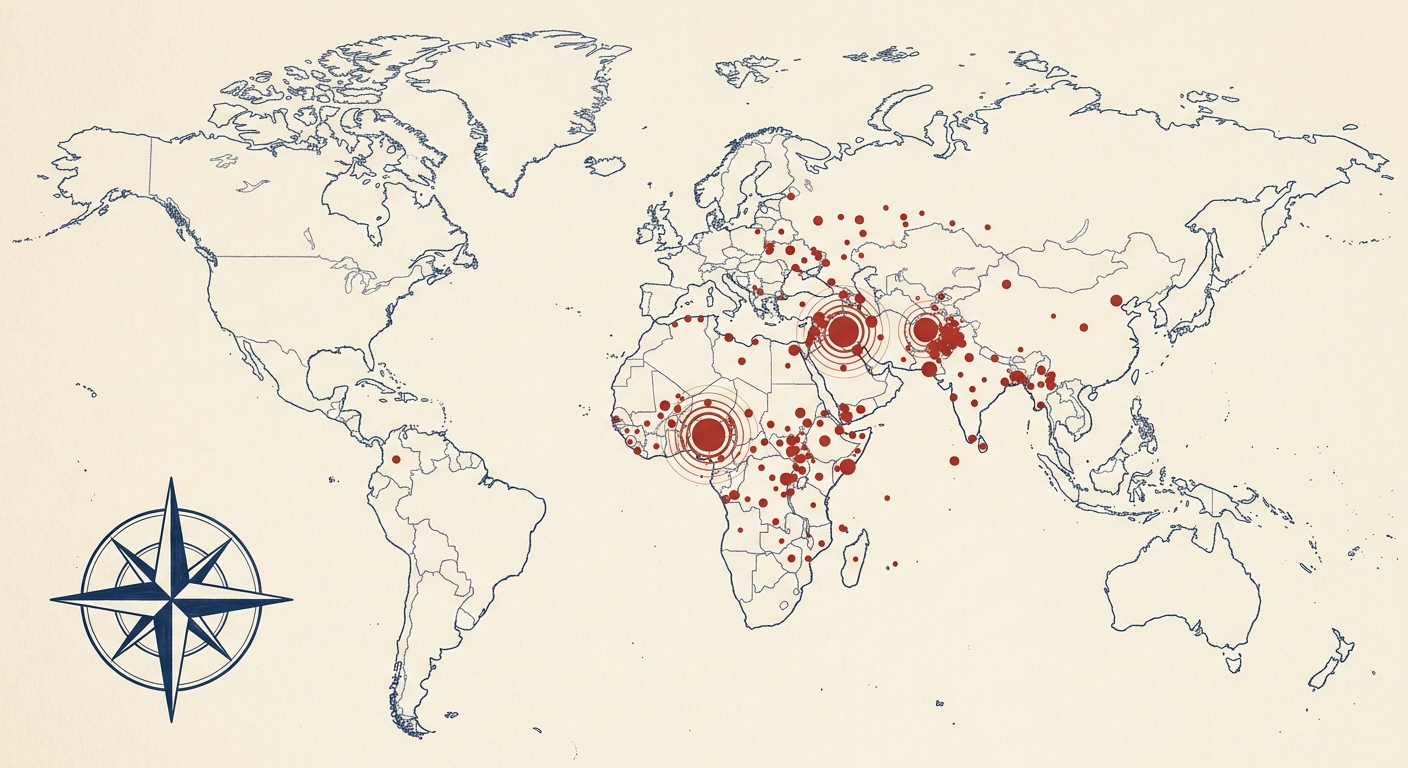
The Global Terrorism Database recorded 170,350 terrorist attacks between 1970 and 2016. More than 400,000 people killed. The numbers obscure a pattern that only becomes visible when you follow it across time — and across geography.
Terrorist attack deaths per year, 1970–2016
1970–1990: The era of ideology. The IRA in Northern Ireland. Sendero Luminoso in Peru. FARC in Colombia. These were revolutionary movements — Marxist, nationalist, separatist. Deadly, but bounded. Deaths rarely exceeded 5,000 per year.
1991–2001: The lull, then the rupture. The Cold War ends. Many insurgencies wind down. Deaths fall below 3,000 per year through the 1990s. Then September 11, 2001 — a single day with 2,977 dead — signals that the geography of terror is about to shift.
2003–2011: The Iraq War opens a wound. Coalition forces topple Saddam Hussein in 21 days. Then the insurgency begins. Al-Qaeda in Iraq, sectarian militias, and suicide bombers drive deaths past 10,000 per year. A country dismantled becomes a laboratory for mass-casualty tactics.
2012–2016: Three groups, three continents, one spike. ISIL seizes territory across Syria and Iraq. Boko Haram declares a caliphate in northeastern Nigeria. The Taliban resurges in Afghanistan. Three organizations, operating simultaneously on three continents, push the global death toll past 43,000 in 2014 — a level not seen since World War II-era political violence.
The 2014 spike was not a coincidence. Three organizations reached maximum operational capacity in the same 24-month window. Each operated in a different region. Each used different tactics. The deaths added up globally.
Deadliest terrorist groups since 2000
Total fatalities attributed to each group, 2000–2016. Globe shows geographic reach.
Source: Global Terrorism Database (START/UMD)
Four groups account for over half of all recorded deaths since 2000. Each is geographically anchored — not global, but locally devastating. Follow their footprint.
Nearly half a million people killed over 47 years. The database records every incident — bombings in markets, assassinations of officials, mass shootings in schools. Scroll to follow where the killing concentrated.
The Islamic State of Iraq and the Levant seized a territory the size of the United Kingdom at its peak in 2014. It governed an estimated 8 million people. Its primary tactic: mass-casualty bombings in public spaces — markets, mosques, checkpoints.
The Taliban were ousted from power in 2001 but never defeated militarily. Operating from mountain sanctuaries along the Afghan-Pakistan border, they sustained a 20-year insurgency that killed more than 24,000 people — predominantly Afghan civilians and security forces.
Founded in 2002 in northeastern Nigeria, Boko Haram — "Western education is forbidden" — declared a caliphate in 2014. Its tactics included mass abductions (276 Chibok schoolgirls in April 2014), suicide bombings, and village massacres across four countries bordering Lake Chad.
Al-Shabaab controls large rural areas in southern Somalia and has carried out spectacular attacks in Kenya — the Westgate Mall massacre (2013, 67 dead), Garissa University (2015, 147 dead). It funds itself through charcoal exports and taxation of the territory it governs.
Four organizations. Four regions. One 24-month window — 2013 to 2015 — when they all reached maximum operational scale simultaneously. This was not coordination. It was convergence: the same global conditions (state fragility, ungoverned territory, foreign intervention) producing the same catastrophic outcome in four different places.
Geography explains where. Method explains how.
Deaths by method of attack, 1970–2016
Cumulative deaths by method of attack worldwide, 1970–2016.
Source: Global Terrorism Database (START/UMD)
Armed assaults and bombings account for more than 300,000 of all recorded deaths — over 75% of the total. These are not exotic methods. They are rifles and improvised explosive devices: cheap, available, and lethal at scale. The weapon that drives global terrorism is not the suicide vest or the car bomb. It is the gun.