Database
How Good Is Your School?
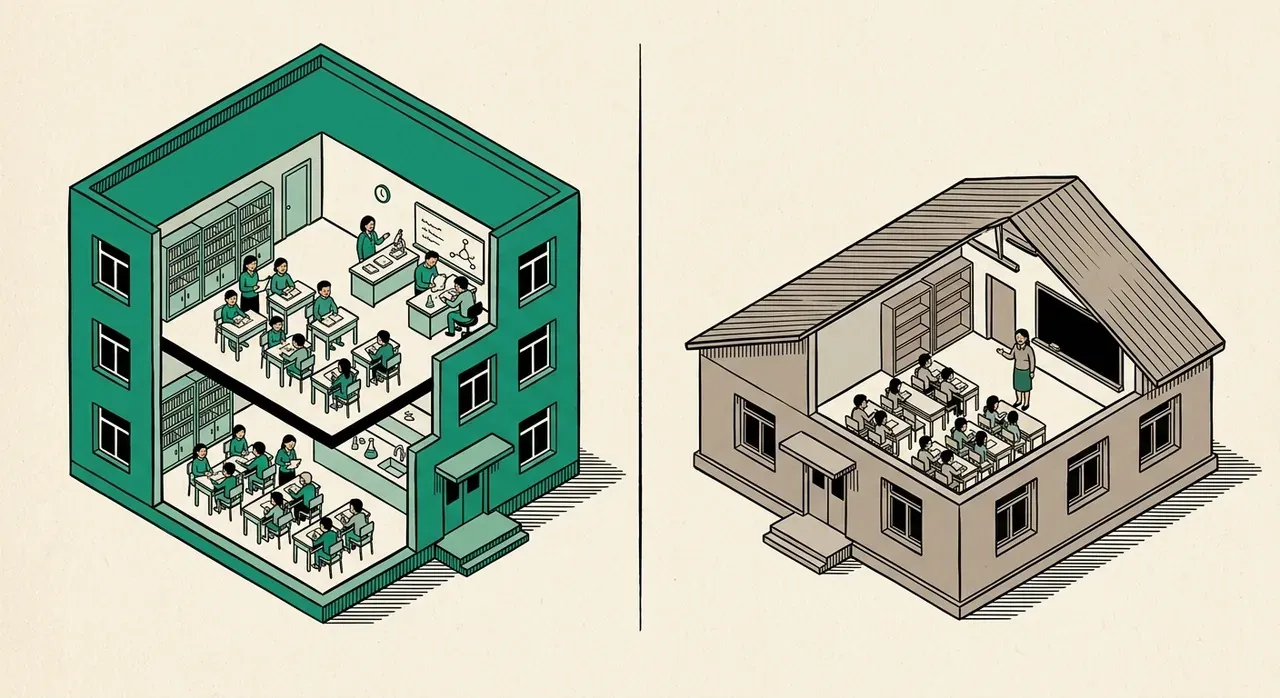
Mongolia's education system faces a stark urban-rural divide. Schools in Ulaanbaatar consistently outperform those in rural areas on national exam scores, but the gap is wider than most parents realize. Private schools dominate the top rankings, yet serve less than 8% of students. This scorecard brings transparency to school performance — search any school, compare exam averages, and see how student-teacher ratios correlate with outcomes.
UB Schools Score 23 Points Higher Than Rural Schools
National exam scores by school location. Urban schools score 23 points higher on average.
Source: Ministry of Education — National Exam Results
Fewer Students Per Teacher → Higher Exam Scores
Student-teacher ratio vs average exam score. Fewer students per teacher correlates with higher scores.
Source: Education Evaluation Center; NSO Mongolia
The data reveals a troubling pattern: student-teacher ratios in rural areas are often twice as high as in Ulaanbaatar, yet teacher salaries are comparable. The result is that experienced teachers migrate to the capital, leaving rural schools in a cycle of understaffing and underperformance. Private schools in UB, with ratios as low as 12:1, consistently post the highest exam scores — but at tuition costs that exclude all but the wealthiest families.
MORE IN SOCIAL
980,000 Cases: How Mongolia's Covid Compared
Which Hospital Should You Choose? Mongolia's Medical Data
3 Charts, 3 Surprises: You Draw Mongolia's Future — Then See What Actually Happened
1.54 Million in One City: Mongolia's Population Imbalance
₮792,000 a Month: Can You Survive in Ulaanbaatar?