50 states. One maddening paradox that exposes how car insurance actually prices risk.
North Dakota has the most dangerous roads in America. Drivers there kill 23.9 people per billion miles traveled — the highest rate of any state. Their average annual insurance premium: $689.
DC has the safest drivers in the country. At 5.9 deaths per billion miles, it is four times safer than North Dakota. Their average annual insurance premium: $1,273.
This is not a rounding error. The safest state pays 85% more for car insurance than the most dangerous one. Understanding why reveals everything about how insurance actually works — and how it doesn't.
The danger ranking — and the pricing that ignores it
The most dangerous states. North Dakota and South Carolina both record 23.9 fatal accidents per billion miles — tied for most dangerous. Montana, West Virginia, Arkansas round out the top five. These are rural states where distances are long, speeds are high, and emergency response is slow. Alcohol impairment is a factor in 42% of ND crashes.
Now look at what they pay. North Dakota pays $689/year. South Carolina pays $859. These are not cheap states by income — North Dakota had the 7th-highest median income in 2014. Insurance is cheap there because there are few cars per square mile and therefore few collisions, not because drivers are safe. Insurance prices density and collision frequency, not mortality rate.
The safest states pay the highest premiums. DC at $1,273/year. New Jersey at $1,301 (highest in the nation). Massachusetts, Connecticut, New York — the densely packed Northeast. Dense cities mean more fender-benders, more theft, more liability claims. Insurance is a math problem about frequency, not fatality. Your odds of dying in a crash are lower in DC. Your odds of a claim are vastly higher.
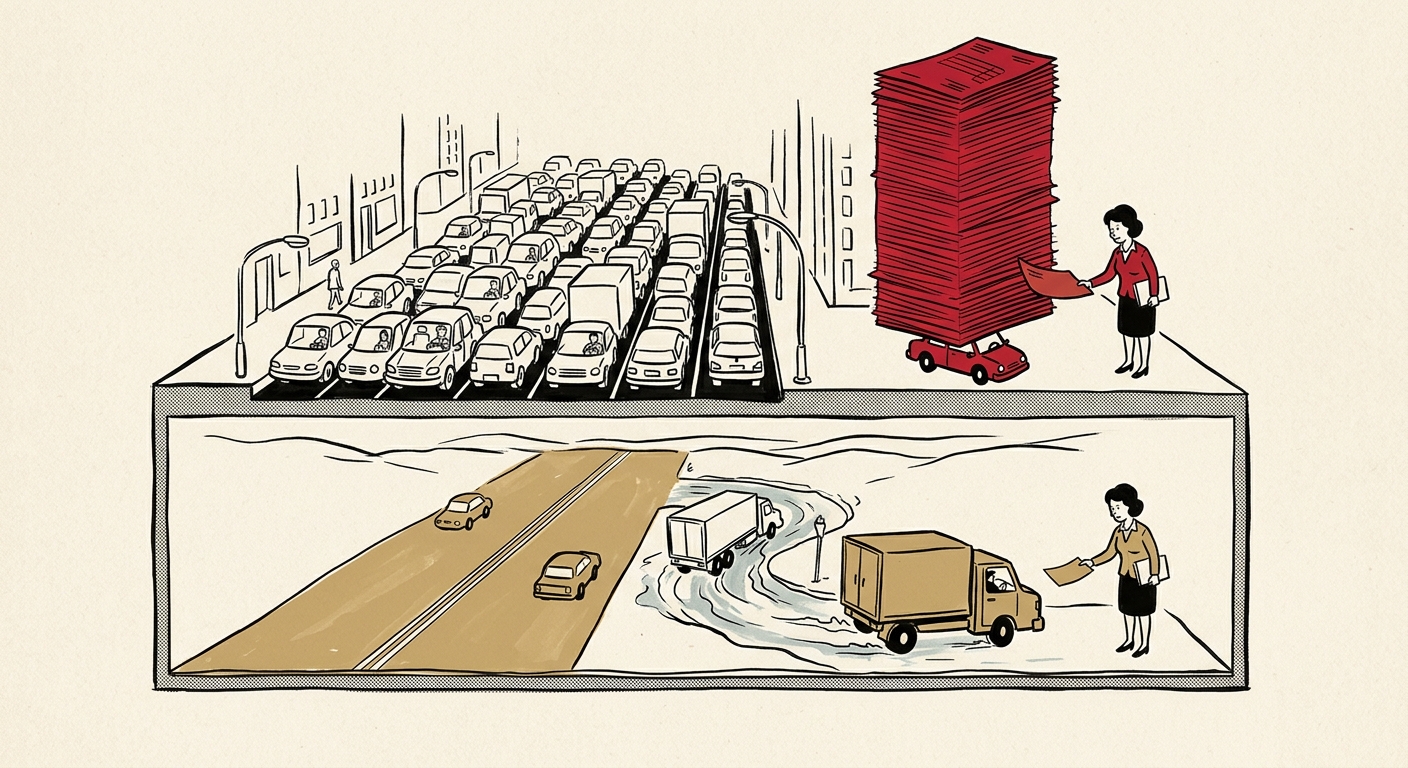
The paradox resolves once you understand what insurance is pricing. It is not pricing the chance that you will die in a crash. It is pricing the chance that a claim will be filed — for any reason.
In rural North Dakota, cars travel vast distances at high speeds. When crashes happen, they are often fatal. But crashes are rare, because there are few other cars nearby. In dense New Jersey, crashes are constant — fender-benders, parking lot collisions, theft, vandalism. Almost none are fatal. Almost all generate claims.
This means the insurance premium is a reasonable estimate of claim frequency — and a terrible estimate of safety. If you are trying to decide which state's drivers are safer, the premium is nearly useless. If you are an insurer trying to price risk, it is exactly right.
MORE IN ECONOMY

17% Mortgage vs. 6%: Should You Rent or Buy in Ulaanbaatar?

Where Does Mongolia's Government Spend? Every Line Item

Mongolia's Two Debt Numbers: $10.5B Government, $37.1B Total
Mutton Costs 45% More in Winter: Plan Your Meat Budget

₮3.2 Trillion: Who Owns Mongolia's Biggest Companies?