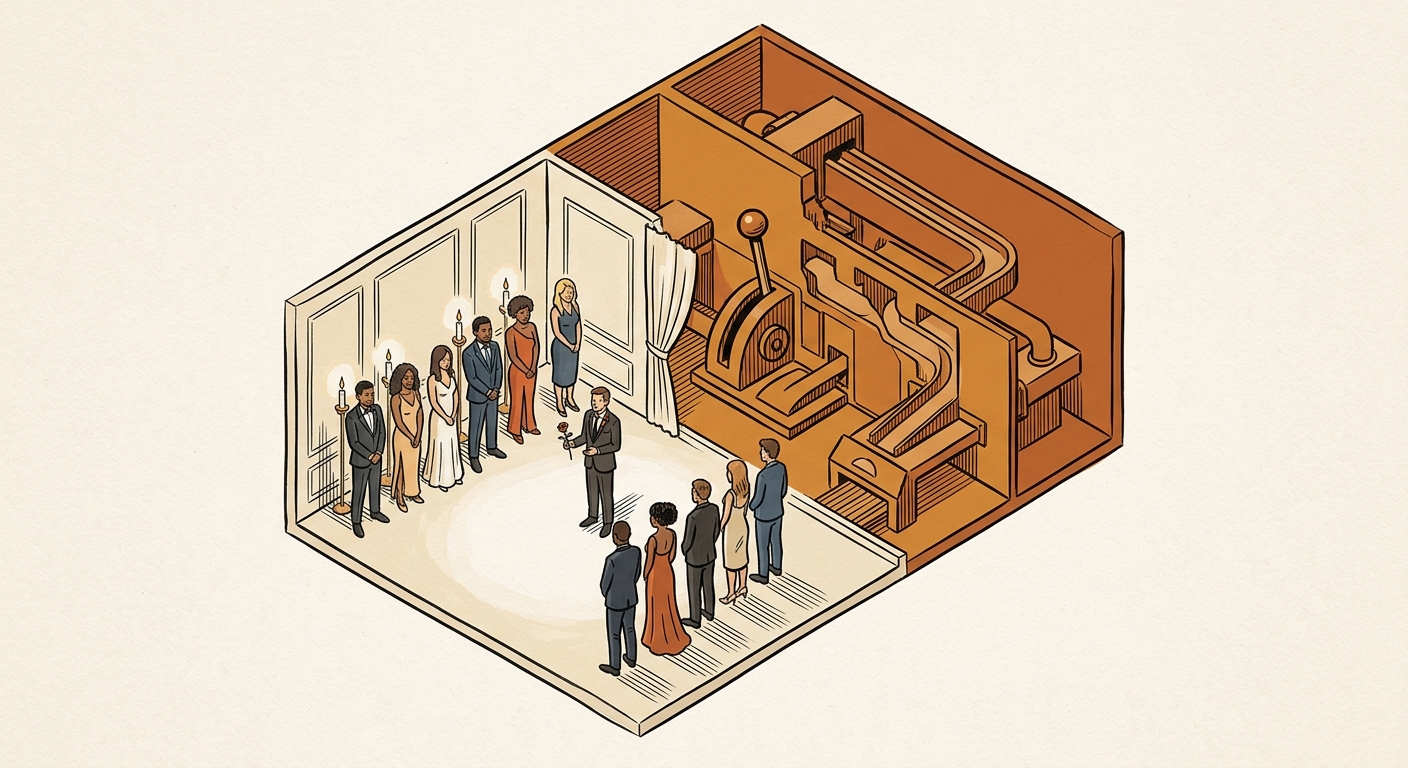
920 contestants. 36 seasons. The hidden math of who wins The Bachelor and Bachelorette.
Every season of The Bachelor and The Bachelorette begins with the same ritual: the first impression rose. Given before the first ceremony, before any dates, before any real time together — it is the host's way of rewarding the person who made the strongest initial impact.
It turns out to matter. Contestants who receive a first impression rose are nearly four times more likely to eventually win the show. In the Bachelorette specifically, they win outright in about one in five seasons.
This is either romantic — the right person really does stand out immediately — or it is a self-fulfilling prophecy: get noticed early, get more screen time, become the front-runner. The data cannot separate the two theories. But the correlation is unmistakable.
How fast contestants get eliminated — and what predicts survival
Episode 2 cuts a third of contestants. From 920 total starts across 36 seasons, only 612 remain after Episode 2 — a 33% cut in a single episode. The first ceremony is pure first-impression. No dates have happened. No private conversations. The host keeps whoever sparked curiosity and sends home whoever didn't.
More roses = higher win probability. In the Bachelorette, receiving three roses during the competition correlates with a 33% win rate. One rose: 2%. Zero roses: 1%. Each rose is effectively a data point about the lead's preference. By Episode 6, only about 25% of contestants remain. By Episode 9, fewer than 9%.
The first impression rose effect. Of 26 seasons that had a first impression rose, the recipient went on to win in 5 — that's 19%. For comparison, in a random draw with 20+ contestants, each person's odds are under 5%. Getting the first rose nearly quadruples your baseline chances. It signals that the show's lead connected with you before anyone else. That signal sticks.
The data covers 36 seasons across The Bachelor and The Bachelorette, tracking 920 contestants across two dimensions: their elimination episode and the type of rose or elimination they received each week.
The pattern is consistent: roses are both a reward and a predictor. They signal where the lead's attention lies. In a show built on competition for affection, accumulated attention compounds. The person who gets noticed first usually keeps getting noticed.
But the correlation is not deterministic. 81% of seasons with a first impression rose were won by someone else. Television audiences are familiar with the pattern: getting the first rose means you are the front-runner. Front-runners get more screen time. Screen time creates investment. Investment keeps viewers watching.
Whether the math predicts romance or ratings is, in the end, the same question.
MORE IN CULTURE

8 Dishes: Can You Name Mongolia's Traditional Foods?
Death in the Avengers Is Mostly Temporary. Here's the Math.
Happy Little Patterns: What Bob Ross Actually Painted