Interactive Tool
Mongolia's Two Debt Numbers
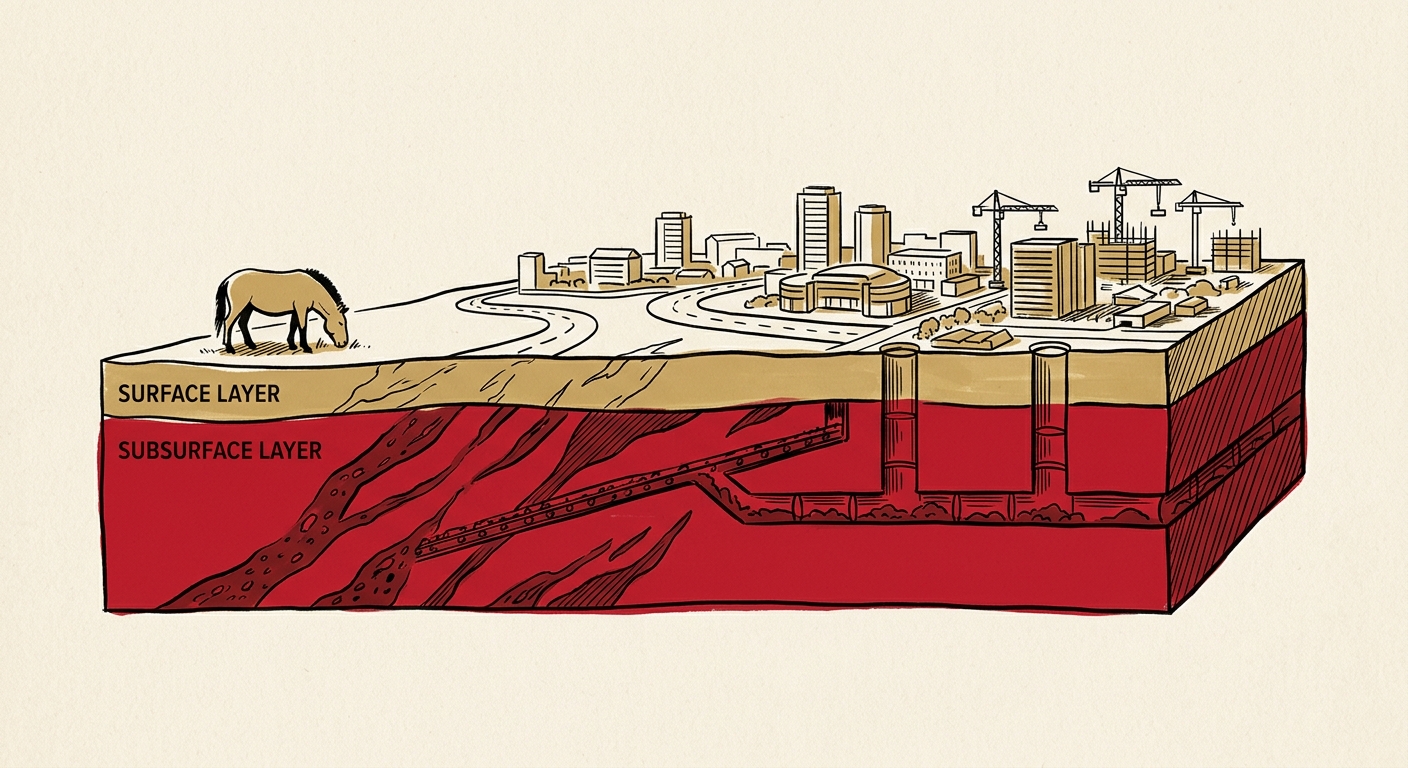
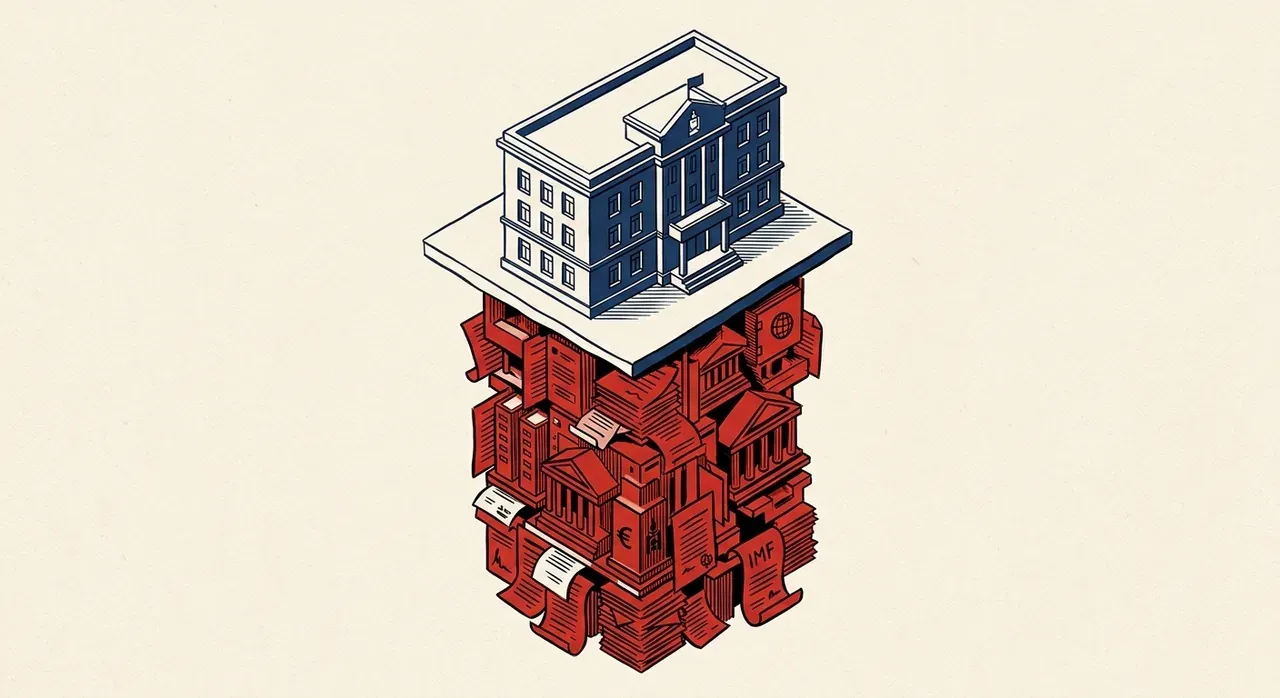
Mongolia has two debt numbers that tell very different stories. Government debt is $10.5 billion — 44% of GDP, moderate by international standards and lower than South Korea's 50%. But total external debt — everything the country owes to foreign creditors including banks, corporations, and state enterprises — is $37.1 billion, or 158% of GDP. That's $10,912 per citizen. This tool lets you explore both numbers, compare with neighbors, and project the future.
The projection reveals a narrow path: if GDP grows faster than debt (which requires sustained mining revenue and fiscal discipline), Mongolia's debt-to-GDP ratio slowly improves. But if commodity prices fall or debt growth accelerates — as happened in 2015-2016 when Mongolia nearly defaulted — the ratio worsens rapidly. The country's economic fate remains tied to copper prices in Shanghai and coal demand in Beijing.
Debt-to-GDP ratio
Government debt as a share of GDP, 2010–2024. Peaked at 87% in 2016.
Source: Bank of Mongolia; IMF World Economic Outlook
Debt-to-GDP ratio
Debt-to-GDP ratio for Mongolia vs regional peers, 2024.
Source: IMF World Economic Outlook; Ministry of Finance
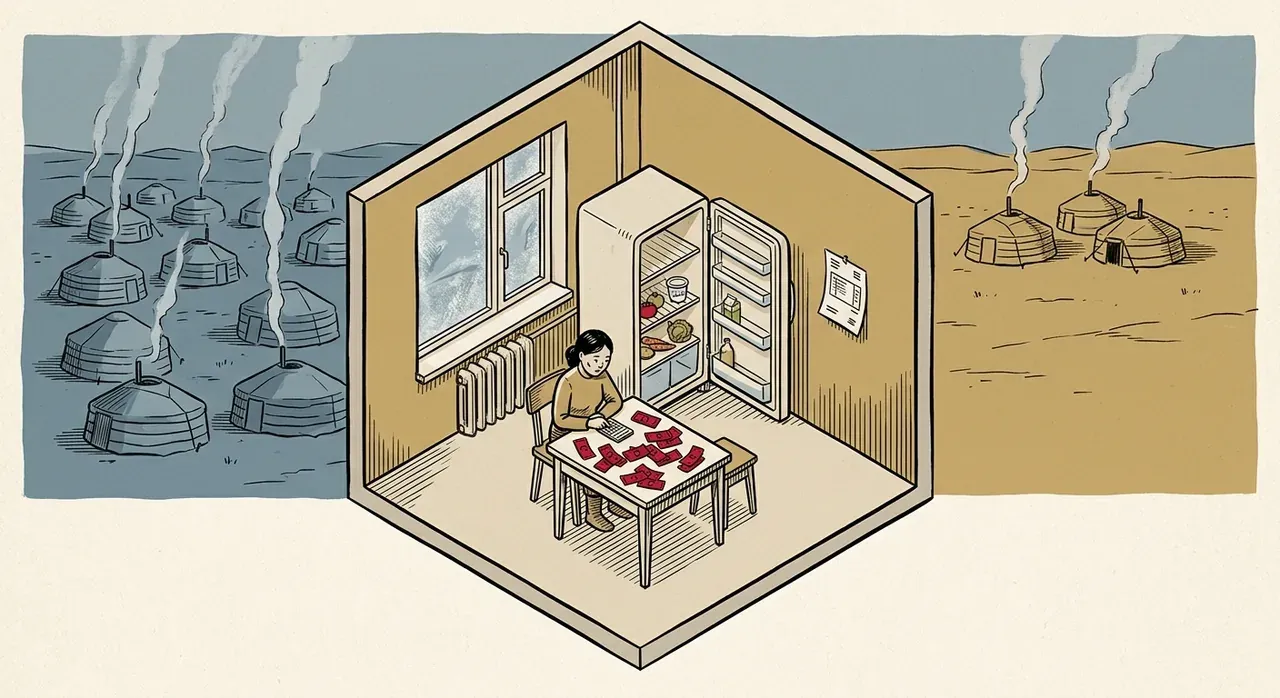
The numbers are abstract until you make them personal. Every time Mongolia issues a new bond, every citizen's share of the debt grows. The $10,912 per person could instead fund a year of university education, or six months of rent in Ulaanbaatar, or the down payment on a subsidized mortgage. The debt isn't just a government problem — it's a generational inheritance.
MORE IN ECONOMY

Mutton Costs 45% More in Winter: Plan Your Meat Budget
Where Does Mongolia's Government Spend? Every Line Item
17% Mortgage vs. 6%: Should You Rent or Buy in Ulaanbaatar?

₮3.2 Trillion: Who Owns Mongolia's Biggest Companies?
Mongolia's Digital Divide