Politics
Mongolia's Corruption Score Has Fallen for a Decade. The Coal Scandal Explains Why.
Every year, Transparency International publishes the Corruption Perceptions Index — a composite score derived from expert and business surveys across 180 countries. A score of 0 means entirely corrupt; 100 means entirely clean. Mongolia has been tracked since 2010. What the 16-year series shows is a country that briefly improved, then reversed, and has not recovered.
The reform climb. From 2010 to 2014, Mongolia's CPI score rose 12 points — from 27 to 39. The period coincided with a wave of democratic reforms and a mining boom that briefly created optimism about institutional development. Mongolia ranked 80th globally in 2014, its best position on record.
Seven years of decline. From 2014 to 2022, Mongolia's CPI score fell from 39 to 33 — erasing most of the reform-era gains. The drop was not linear: some years held flat before falling again. The country's global rank slid from 80th to 116th over the same period. The decline predates the coal scandal; it reflects a longer structural erosion of governance quality.
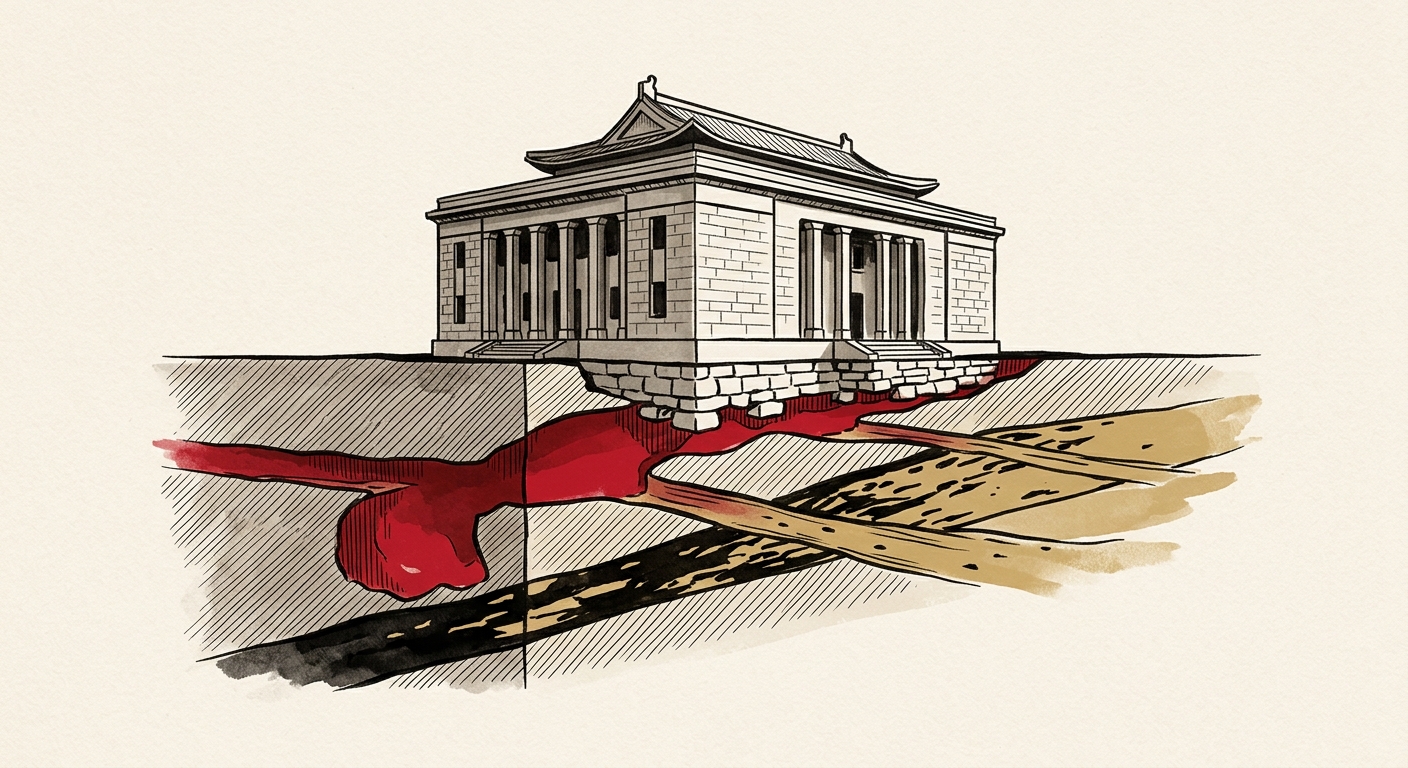
Coal scandal year — Mongolia's new floor. In December 2022, mass protests erupted in Ulaanbaatar after a parliamentary investigation alleged that approximately 6.5 million tonnes of coal had been exported to China without customs registration — a potential loss estimated at $11–13 billion (parliamentary figure, contested). Thirty-five people were charged. The IAAC investigation continues. By 2025, Mongolia's score had fallen further to 31 — its lowest on record, and 11 points below the global average of 42.
The coal scandal crystallised what had been a diffuse erosion. An estimated $11–13 billion in coal revenues — a parliamentary figure that the government has contested — allegedly moved through Erdenes Tavan Tolgoi's export operation without triggering formal customs duty. Former ETT executive director Enkhbayar Jigjid was arrested. The IAAC has charged 35 individuals. As of 2025, the investigation is ongoing. The figures carry MEDIUM reliability: they derive from a parliamentary inquiry, not an independent audit.
A CPI score does not measure corruption directly — it measures perceptions among experts and business leaders. But perception shapes investment, capital allocation, and institutional trust. Mongolia's score of 31 places it in the bottom third of ranked countries globally, alongside nations with significantly more constrained political systems. The reform era of 2010–2014 suggested a different trajectory was possible. The decade since has moved consistently in the other direction.
MORE IN POLITICS
9 Questions: How Well Do You Know Mongolian History?
The $20,000 weapon that broke the math of modern war.
The Price of Deterrence
Parliament Reset