Visual investigation · Drone warfare
$20,000 vs. $4,000,000
Every standard missile costs more than the drone it kills.
Cost ratio of interceptor to target. SM-6 costs 430× more than a Shahed-136 drone.
Source: RAND, US DoD FY2025 budget, Defense Express, The War Zone
Iran launched the largest drone-and-missile salvo since World War II.
170 drones. 30 cruise missiles. 120 ballistic missiles. All in a single night. Total cost to Iran: roughly $81 million.
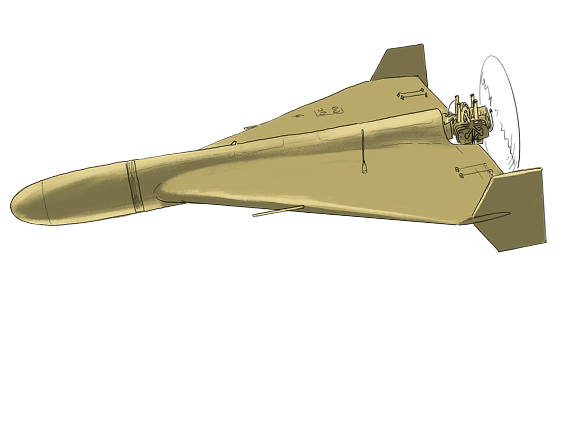
Western Iran. The Shahed-136 — a plywood airframe, a motorcycle engine, and a 50kg warhead — costs roughly $20,000 to manufacture.
Iran built 170 of them, aimed them west, and let arithmetic do the rest.
The swarm crossed Iraq, Jordan, and Syria — slow, low, radar-evading. Not fast enough to be missiles. Not small enough to ignore.
Individually cheap. Collectively, they forced the most expensive air-defense network on Earth to wake up at 2am.
The US-led coalition caught 99%. The bill: roughly $1.35 billion.
That is a 17× return for Iran on every dollar spent. One Patriot intercept costs $4 million. The drone it kills cost $20,000. Every trigger pull is a 200:1 gift to the attacker.
This is not morale. It is arithmetic.
Same playbook. Different ocean.
Yemen's Houthis fired 190+ drones and missiles at commercial shipping through the Red Sea. Suez Canal transits halved. Insurance rates tripled.
You do not need to sink ships. You only need to scare invoices.
Russia didn't invent the Shahed. It licensed the playbook.
Since 2022, Russia has launched 112,000+ Shahed-class drones at Ukraine — from three directions simultaneously: north from Bryansk, east from occupied Donbas, south from Crimea.
The math is identical to Iran's. The scale is 20× larger.
Not one city. Every city.
Kyiv. Kharkiv. Odessa. Dnipro. Zaporizhzhia. Russia targeted power grids, ports, rail hubs, and water systems — civilian infrastructure chosen for maximum economic disruption.
At 6,400 strikes per month, the arithmetic is brutal: the defender pays $4M per intercept. The attacker pays $20K per launch.
Then Ukraine built a $1,000 interceptor drone in a garage.
For the first time in this war, the defender was cheaper than the attacker.
One Shahed costs $20,000. One FPV interceptor costs $1,000. The cost ratio inverted — 0.05× instead of 200×.
This is the arithmetic that ends drone saturation attacks.
Iran. Yemen. Russia. Three militaries running the same calculation.
Offense is now priced like electronics. Defense is still priced like moonshots.
The drone changed war the way the container ship changed trade — quietly, and then all at once. The question is not whether cheap drones win. The question is who builds the $1,000 answer first.
Russia scaled to industrial volume.
Monthly drone and missile strikes on Ukraine, Jan–Dec 2024.
Source: Ukrainian General Staff, Kyiv Independent, CSIS
Suez Canal traffic collapsed 58% after Houthi strikes began.
Monthly vessel transits through the Suez Canal, Nov 2023 – Oct 2024.
Source: UN OCHA, Lloyd's List Intelligence, Kpler
What $1 billion buys.
Number of units purchasable for $1 billion at current unit costs.
Source: Defense Express, open-source procurement estimates
MORE IN POLITICS
9 Questions: How Well Do You Know Mongolian History?
The Price of Deterrence
The Monuments Presidents Make — and the Ones They Take Away
Mongolia's Corruption Score Has Fallen for a Decade. The Coal Scandal Explains Why.