Investigation
40,000 People a Year Leave Rural Mongolia
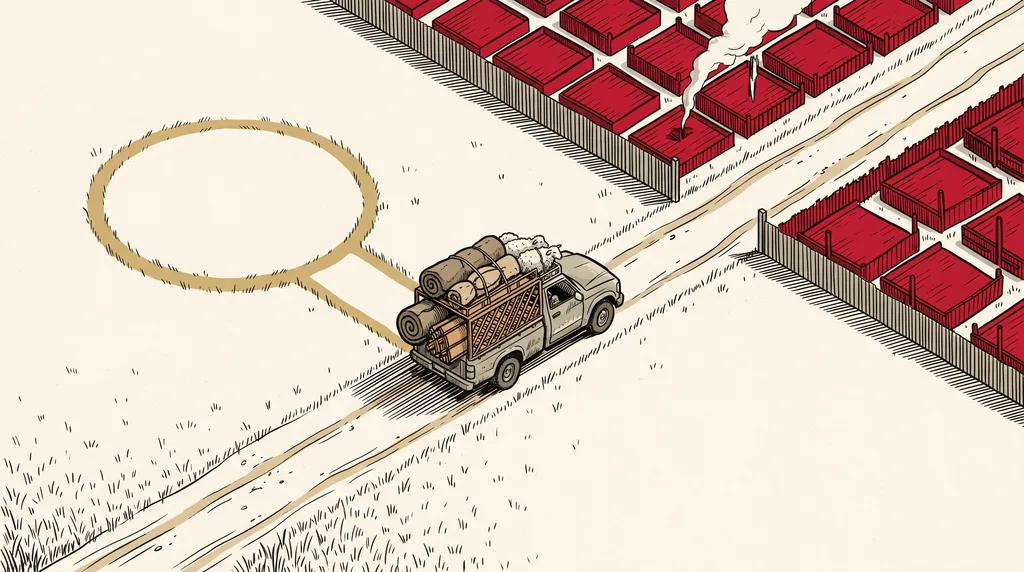
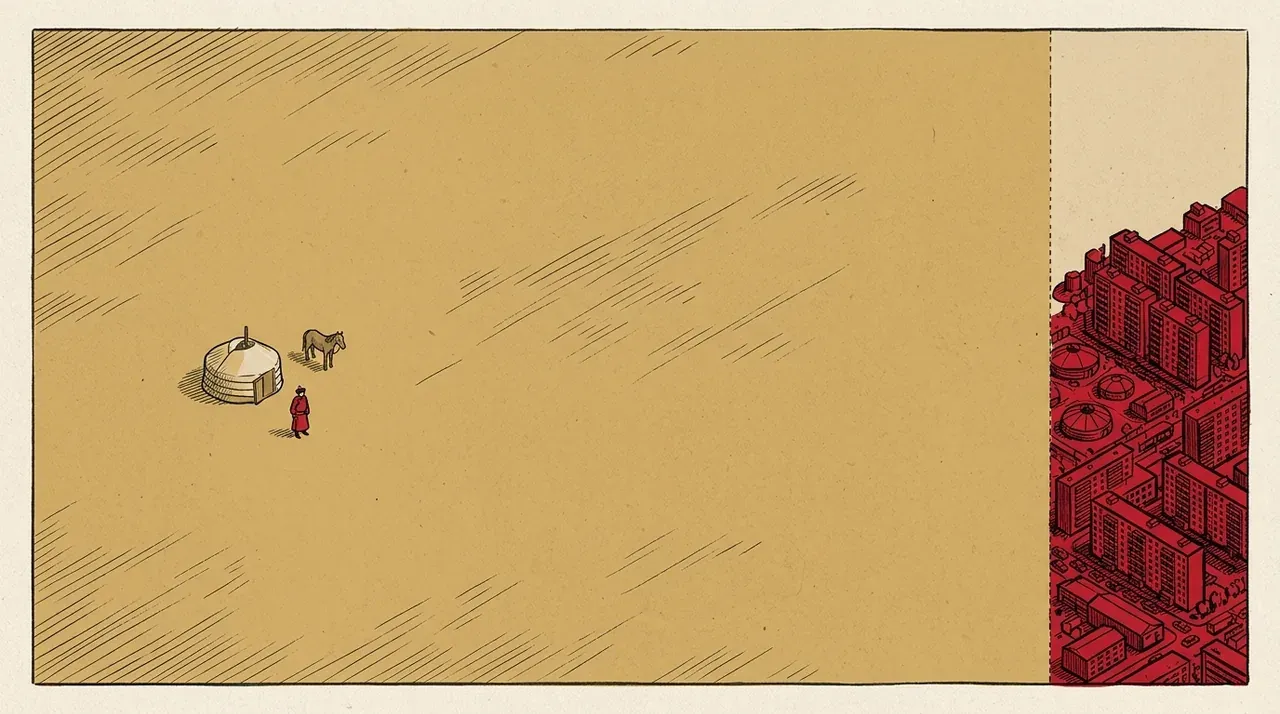
Gantulga was a third-generation herder in Zavkhan aimag. He had 200 goats, a ger, and land his grandfather had grazed. In 2022, the dzud killed 80% of his herd in six weeks. By spring, he had packed everything he could carry into a shared minivan and joined the line of families entering Ulaanbaatar's expanding ger districts. His story is not unusual — it is the defining migration story of modern Mongolia. Between 2014 and 2024, more than 320,000 people moved from rural aimags to Ulaanbaatar, swelling the capital's population to over 1.6 million. That is nearly half the entire country, in a city that covers less than 0.5% of its land.
Mongolia's countryside is emptying. Between 2014 and 2024, more than 320,000 people left rural aimags — permanently. That is nearly the population of a mid-sized city, every decade, flowing out of the steppe and into Ulaanbaatar.
Zavkhan aimag, in western Mongolia, is one of the hardest-hit provinces. The 2021–22 dzud destroyed 60% of livestock herds across the region. Gantulga's 200 goats were reduced to 38 animals. Without a herd, the economy of the steppe collapses instantly.
Families travel east along the main road and rail corridor toward Ulaanbaatar. The journey is usually one-way. Zavkhan, Arkhangai, and Uvs aimags account for nearly 40% of all rural-to-urban migrants. They travel 700–1,200 km to reach the capital.
Ulaanbaatar absorbs tens of thousands every year. Between 2014 and 2024, the capital's population grew by 240,000 — almost entirely through in-migration, not birth rate. Infrastructure built for 800,000 now serves over 1.6 million people.
New arrivals settle in the ger districts — informal settlements ringing the capital with no central heating, no running water, coal stoves that create the world's worst urban air pollution in winter. More than 60% of Ulaanbaatar's population now lives here.
Top origin aimags (2014–2024)
Aimags that sent the most migrants to Ulaanbaatar, cumulative 2014–2024.
Source: National Statistics Office of Mongolia
Annual net migration to Ulaanbaatar
Net annual migration to Ulaanbaatar. Positive = more arrivals than departures.
Source: NSO Mongolia; Ulaanbaatar City Authority
Reasons for migrating, 2022 NSO survey
Self-reported reasons for moving to UB, NSO survey 2022. Multiple answers allowed.
Source: NSO Mongolia — Migration Survey 2022
The data tells a structural story that individual family histories confirm. Ulaanbaatar's population has grown from 900,000 in 2000 to 1.6 million in 2024 — not through a rising birth rate, but through sustained in-migration from the countryside. The ger districts, informal settlements ringing the city, now house over 60% of Ulaanbaatar's residents. They are Mongolia's largest housing category and its most underserved. Former herders arrive with skills — animal husbandry, weather reading, seasonal logistics — that find few buyers in an urban economy demanding construction workers, service staff, and informal traders. The gap between the migration they made and the opportunity that awaited them is where Mongolia's urban poverty originates.
MORE IN SOCIAL
₮792,000 a Month: Can You Survive in Ulaanbaatar?
3 Charts, 3 Surprises: You Draw Mongolia's Future — Then See What Actually Happened
380 µg/m³ in January: How Coal Smoke Reaches Your Lungs
1.54 Million in One City: Mongolia's Population Imbalance
21 Aimags: Which One Should You Live In?