Environment
8.1 Million Animals Lost: Mongolia's Deadly Winters
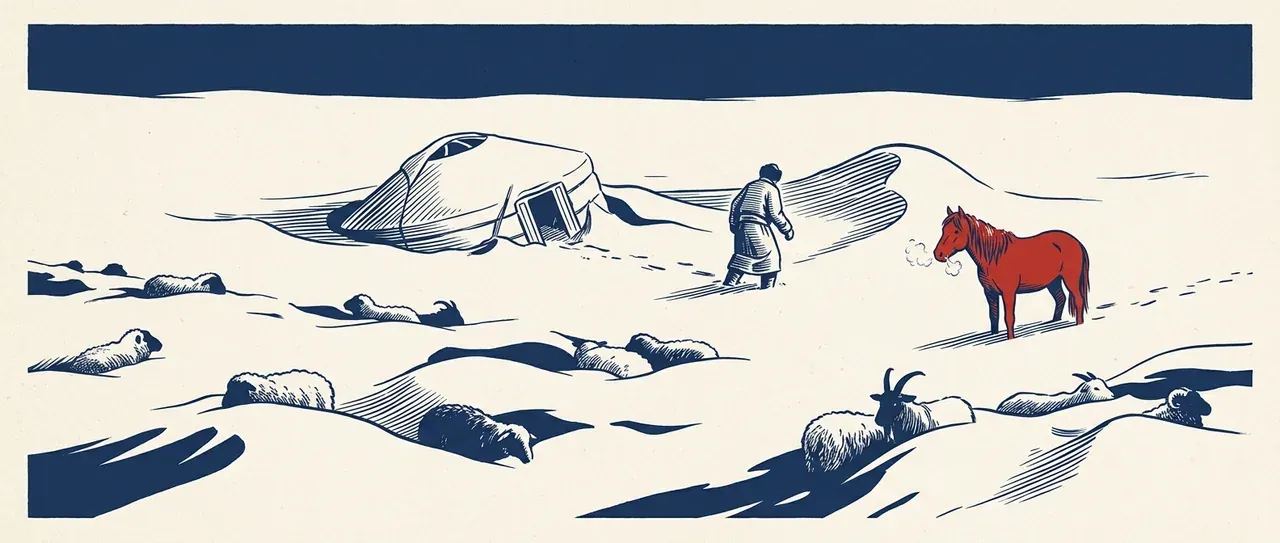
Every few years, a combination of summer drought and extreme winter cold locks Mongolia's steppe under ice. Livestock cannot reach the grass beneath, and they die by the millions. The phenomenon is called dzud — a Mongolian word with no direct English equivalent — and it has become both more frequent and more severe as climate change reshapes the country's seasonal patterns. The 2009–2010 dzud killed 9.7 million animals, roughly 22% of the national herd at the time. The 2023–2024 season delivered another catastrophic event, with preliminary estimates placing livestock losses above 7 million. These are not acts of God. They are predictable, measurable, and — to a degree — preventable. The data reveals where the system is failing.
2009–2010 dzud was the deadliest — nearly 10 million animals lost
Total livestock deaths per dzud event. 2009–10 killed 9.7 million animals.
Source: National Statistics Office of Mongolia
Mongolia's emergency response system has improved since the catastrophic 2010 dzud but remains structurally underfunded. The national Dzud Risk Index, developed with UN support, now provides herder communities with early warnings based on vegetation, snowfall, and temperature data. Yet translating warnings into action requires resources — hay reserves, veterinary supplies, emergency pasture access, and cash transfers — that are not consistently available. The provinces most exposed to dzud risk are also among the most remote and least served by road infrastructure.
Average winter snowfall depth (cm)
Average winter snowfall depth across all monitoring stations, 2000–2024.
Source: National Agency for Meteorology
Herder households with fewer than 50 animals — Mongolia's most economically vulnerable livestock keepers — suffer disproportionate losses, often losing their entire herd in a single severe event. The demographic of affected herders is shifting. Younger Mongolians are leaving the countryside, meaning the herder population is aging and has fewer people to share the labor of winter animal care. At the same time, herd sizes have grown as individual herder families replaced lost animals in post-dzud rebounds, creating a cycle of over-stocking and catastrophic loss.

Herder households by herd size (%)
Share of herder households by herd size. Smaller herds are more dzud-vulnerable.
Source: NSO Mongolia; Ministry of Food and Agriculture
Mongolia's constitution protects citizens' right to nomadic pastoralism, and political pressure to compensate herders after dzud is intense. But compensation alone does not break the cycle — it may even perpetuate it, if it subsidizes rebuilding herds to unsustainable levels. Long-term solutions require integrated land management, herd size regulation, and climate-adaptive infrastructure, none of which can be achieved without sustained political will. The data is unambiguous. The path forward requires choices that no algorithm can make.
MORE IN ENVIRONMENT
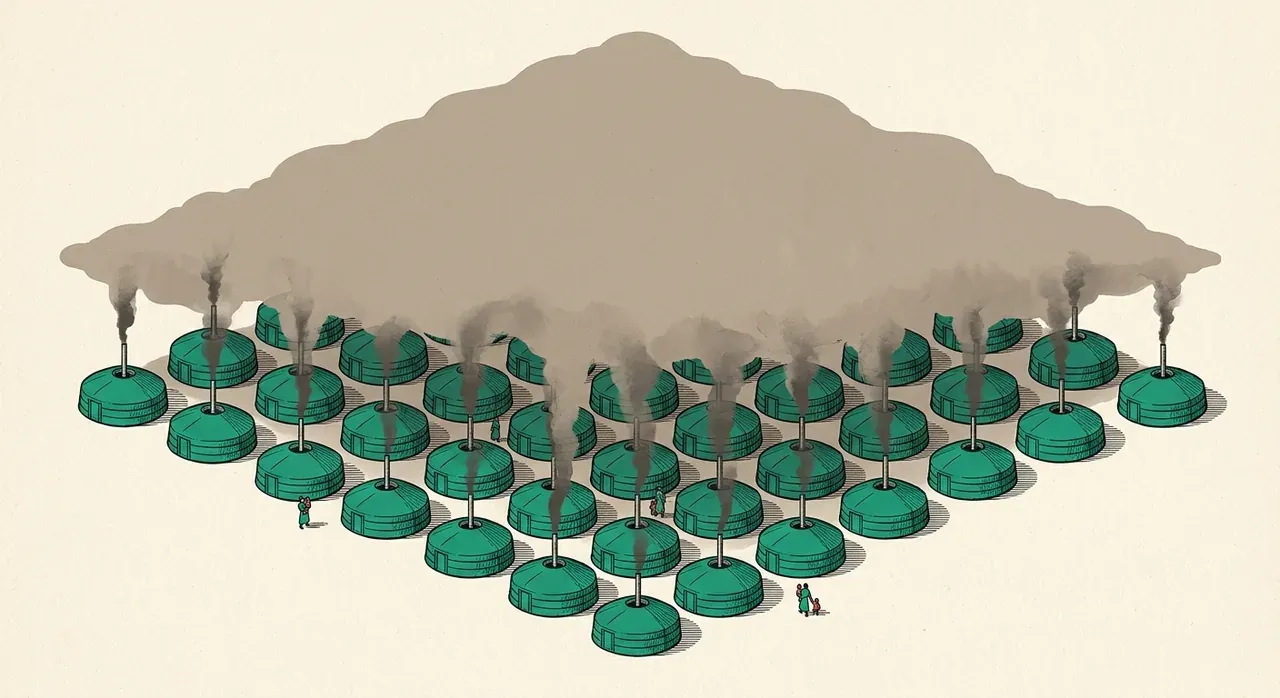
4,000 Lives a Year: Mongolia's Air Pollution Deaths
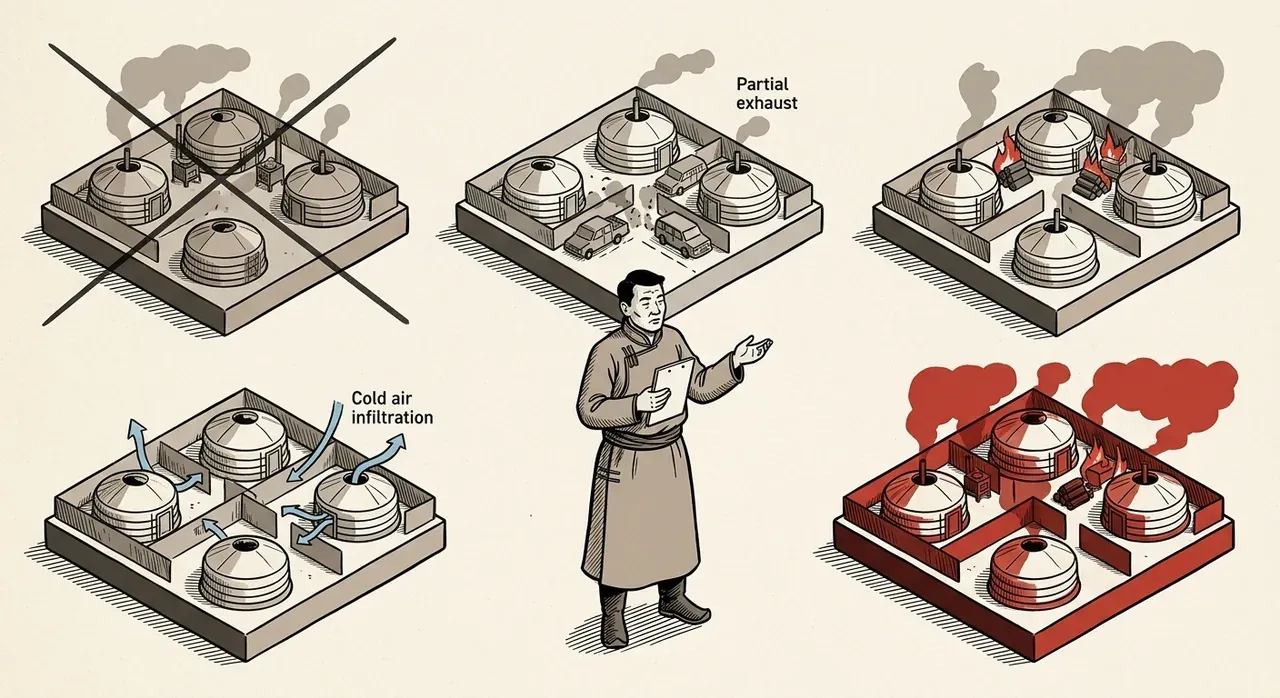
Coal Ban Cut Pollution in Half — So Why Is Ulaanbaatar's Air Still Deadly?
680 µg/m³: The Deadliest Air in Ulaanbaatar's Ger Districts
73% Pasture: How Mongolia Uses Its 156 Million Hectares
25,200 Hectares: Inside Mongolia's Mining Permits