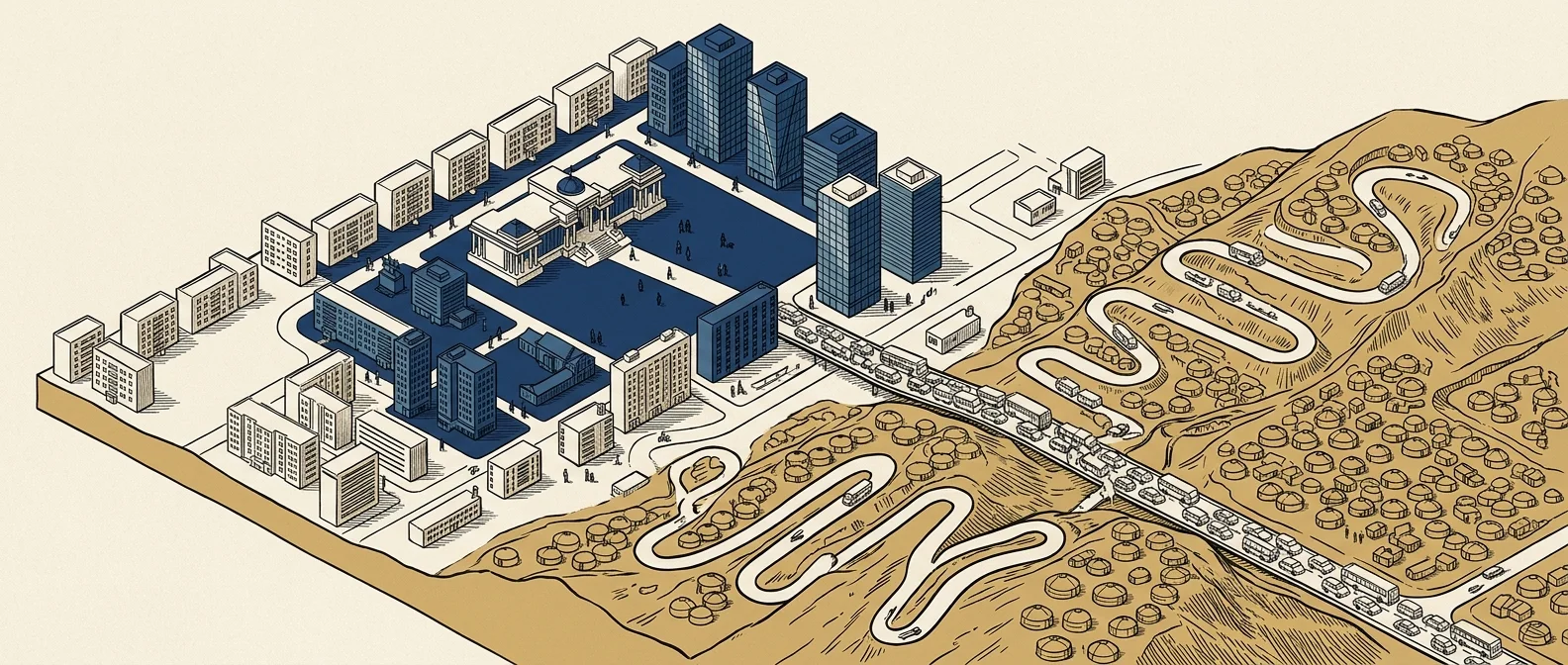
The Distance Divide
One city. Five travel realities.
Ulaanbaatar is home to 1.7 million people — more than half of Mongolia's entire population packed into a valley 50 kilometers wide. But the city's nine districts don't share the same urban experience. They barely share the same travel time.
Off-peak: the best case
Even with empty roads, geography already separates the city into worlds. Central districts — Chingeltei and Sükhbaatar — sit on top of the city's core. Ger districts are 13 kilometers away. Baganuur is 115.
Off-Peak Commute to City Center — by District
Average off-peak drive time from each district to Sukhbaatar Square, minutes.
Source: OSRM / OpenStreetMap 2026
Peak hour: the real city
Add morning rush hour and the gaps explode. Songinoxairkhaan — home to over 400,000 people in ger district housing — swells from 18 minutes to 65 minutes. Residents who leave at 8am arrive after 9am. That is a daily round-trip of over two hours, every working day.
Peak-Hour Commute to City Center — by District
Average peak-hour drive time from each district to Sukhbaatar Square, minutes.
Source: OSRM/OSM 2026 + ADB 2015 peak multipliers
Baganuur: a city that isn't there
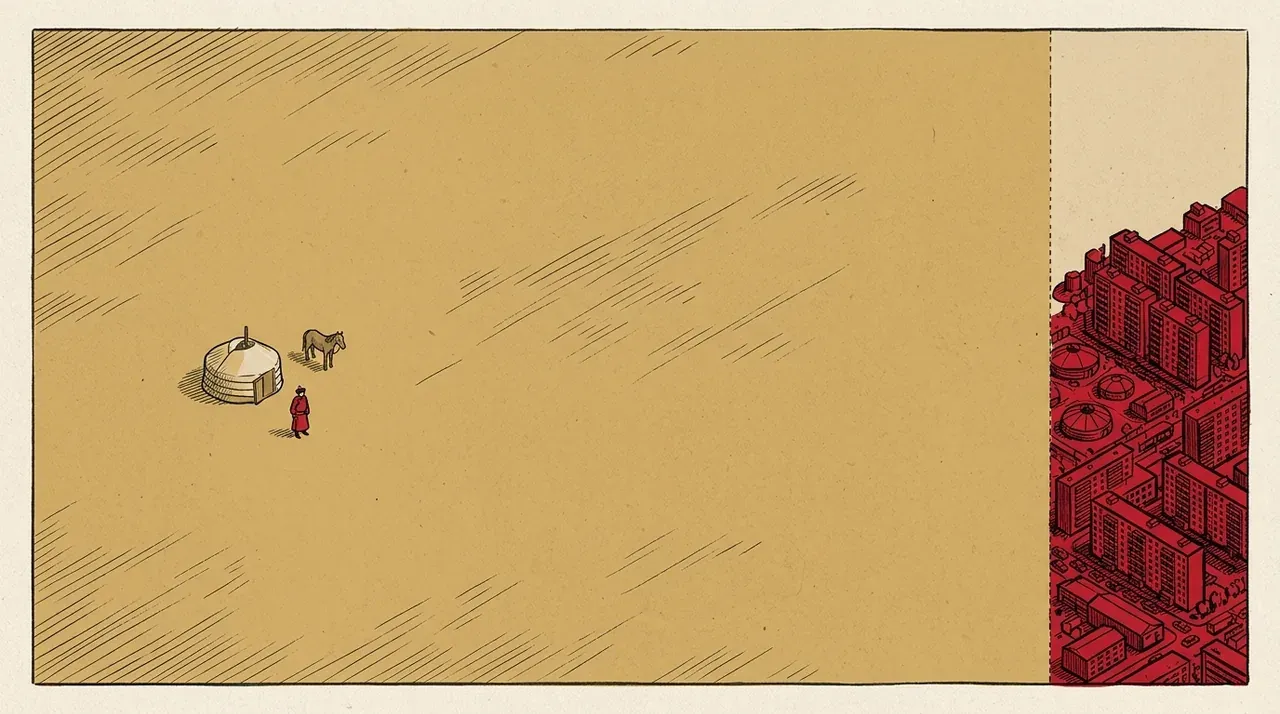
Then there is Baganuur. Officially a district of Ulaanbaatar. Actually 115 kilometers to the east — a former Soviet-era coal mining town that was administratively absorbed but never physically connected. At peak hour, it is nearly two hours from the city it nominally belongs to.
Its 25,000 residents don't commute to Ulaanbaatar. They can't.
MORE IN SOCIAL
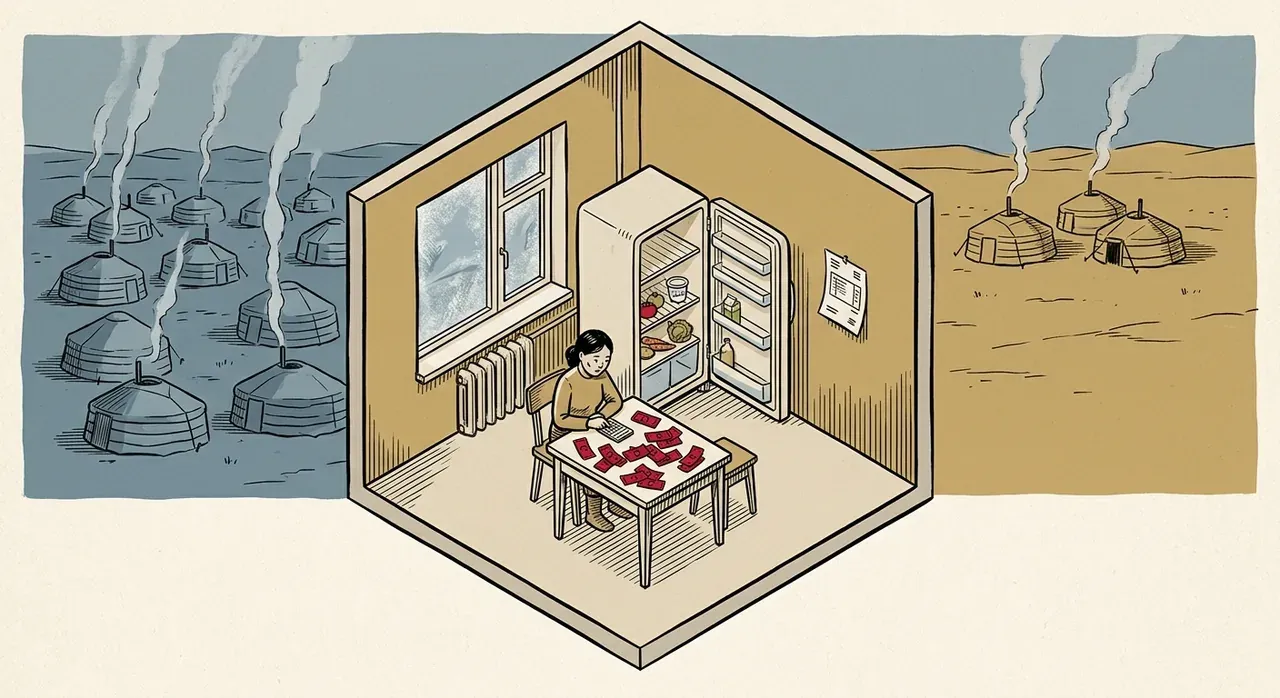
₮792,000 a Month: Can You Survive in Ulaanbaatar?
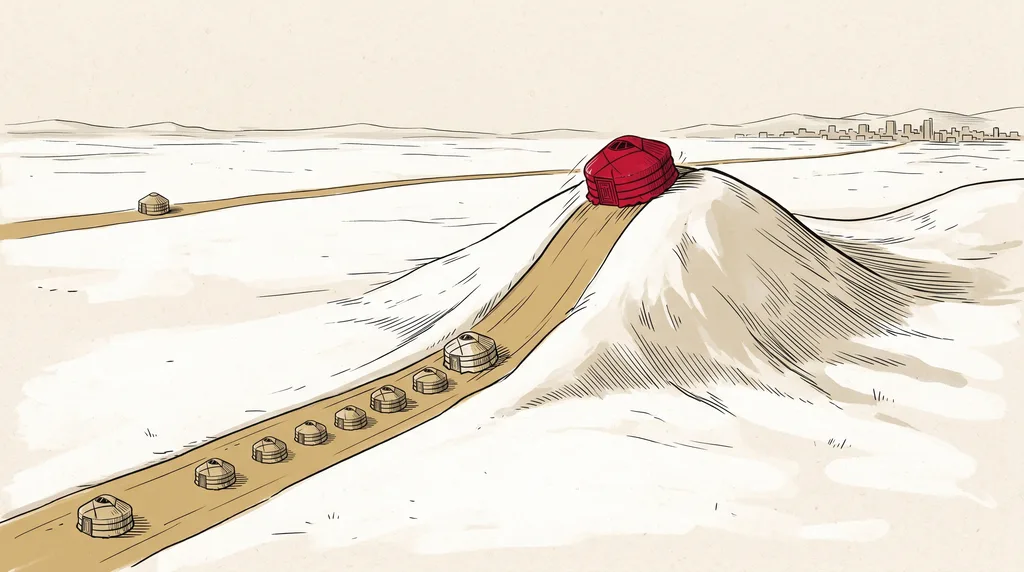
980,000 Cases: How Mongolia's Covid Compared
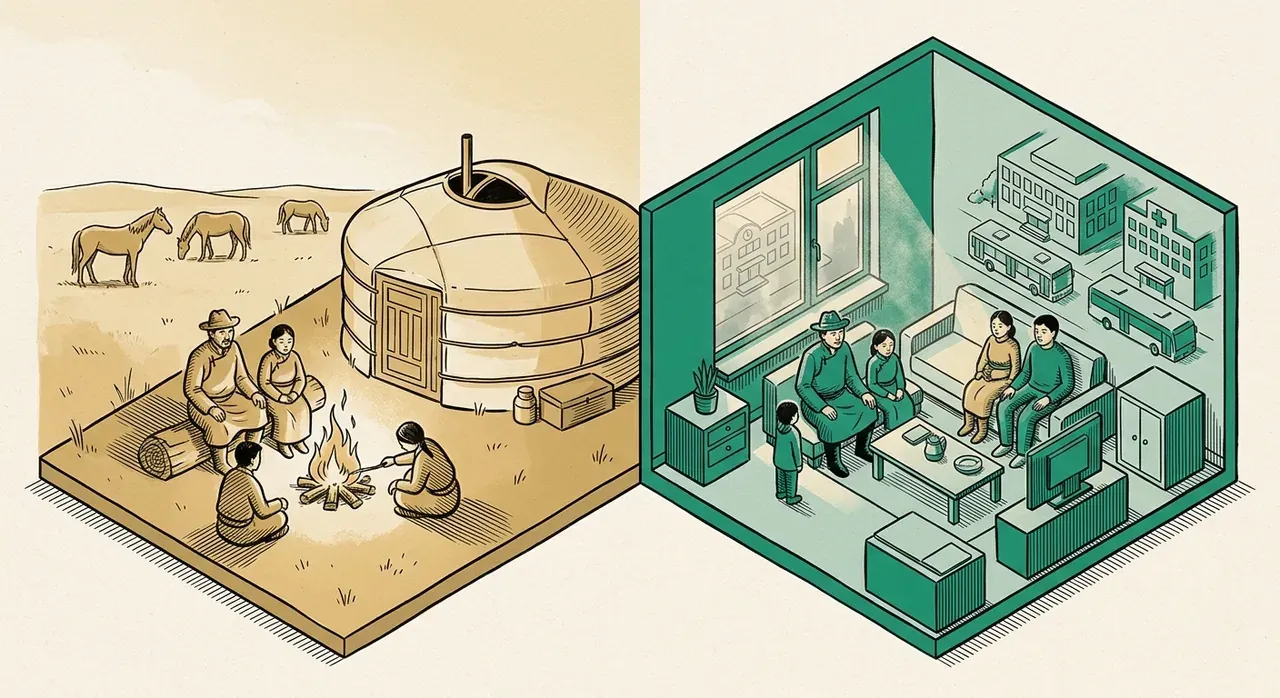
Nomad vs. City: Which Life Scores Higher?

3 Charts, 3 Surprises: You Draw Mongolia's Future — Then See What Actually Happened
Top Schools vs. Bottom Schools: Mongolia's Education Gap